By the Reset Wellness & Aesthetics team Last updated: September 21, 2026
If you run, lift, cycle, or play recreational sports, you may be wondering whether cold recovery is worth your time. This guide compares what each option involves, what the research supports, and when a simple home setup may be enough.
This article is educational and is not medical advice.
What is an ice bath, and how is a cold plunge different?
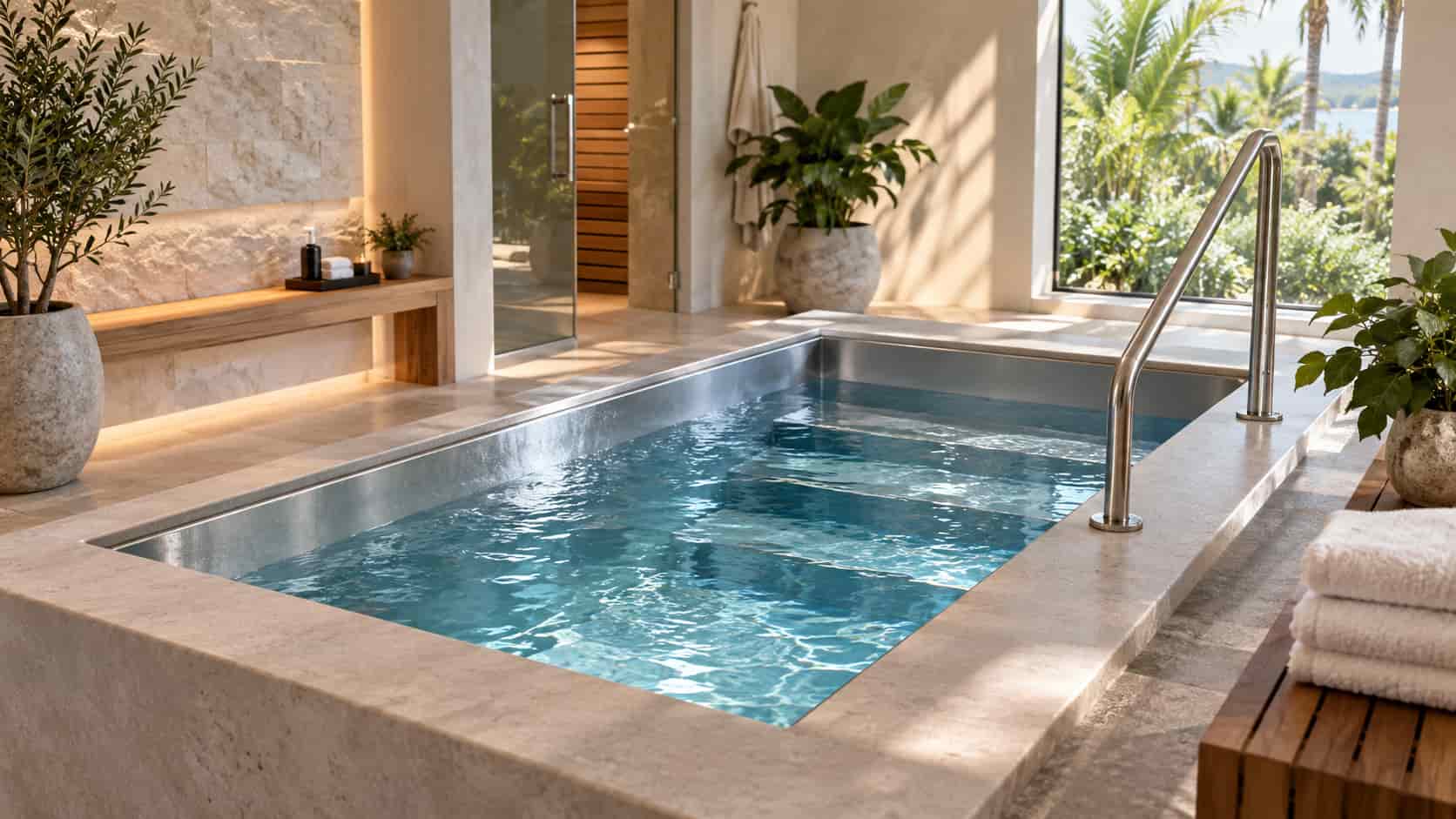
Temperature-controlled cold plunge tub with steps for entry.
An ice bath is a tub filled with water and ice; a cold plunge uses a chiller to control water temperature. Both provide cold water immersion, so the main difference is how the water is cooled and maintained.
A DIY bath requires preparation, temperature checks, and cleanup. A chilled tub can make the experience more consistent, but it still needs appropriate cleaning and maintenance. Neither the amount of visible ice nor the price of the equipment proves that recovery will be better.
Research protocols vary. Water around 50–59°F (10–15°C) and exposures around 10–15 minutes appear in the recovery literature, but these are research examples, not a starting prescription. A first session should be individualized, and colder or longer is not automatically better.
What is cryotherapy, and which type are we comparing?
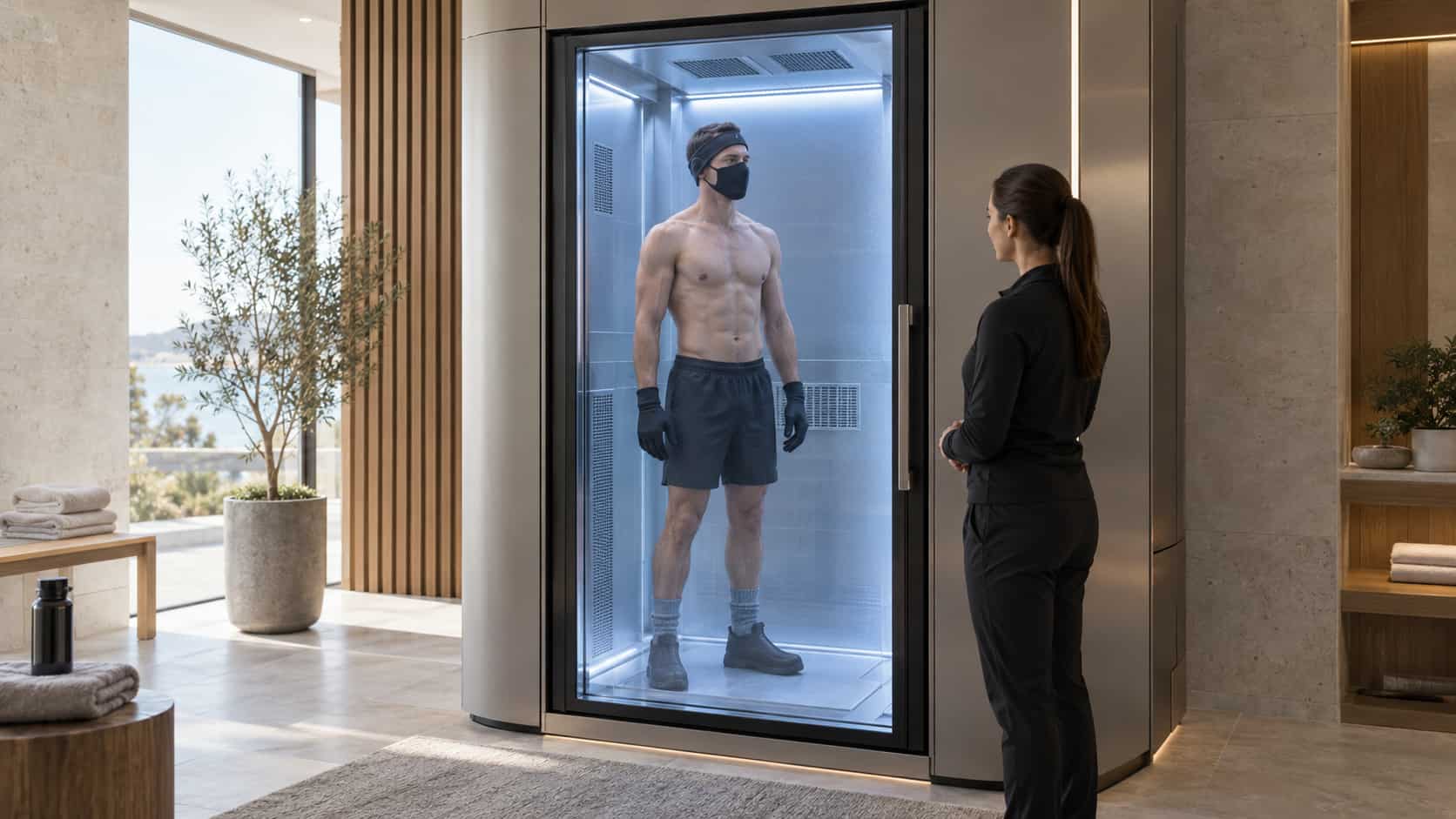
Adult inside a whole-body cryotherapy chamber during a supervised session.
Whole-body cryotherapy briefly exposes your body to extremely cold air inside a chamber. Localized cryotherapy applies cold to a specific area, such as a shoulder or thigh, rather than exposing the whole body.
Whole-body research commonly describes air below −148°F (−100°C), with exposures lasting two to four minutes. Device settings and protocols differ. The comparison below concerns whole-body exposure, not localized services.
Air and water transfer heat differently, so their temperature readings are not equivalent measures of the cold your body experiences. A much lower air temperature does not automatically mean a more effective session.
Cryotherapy vs ice bath: how do they compare side by side?

Ice bath and whole-body cryotherapy compared by temperature, session length, cost, and recovery evidence.
Cold water immersion takes more preparation and usually more exposure time; whole-body cryotherapy offers a brief, dry session. The evidence is more supportive of immersion for some short-term recovery outcomes, but neither option guarantees better performance.
| Factor | Ice bath or temperature-controlled cold plunge | Whole-body cryotherapy |
|---|---|---|
| How it works | Immerses your body in cold water | Exposes your body to extremely cold air |
| Temperature | Research examples around 50–59°F (10–15°C); protocols vary | Research commonly uses air below −148°F (−100°C) |
| Typical session length | Often around 10–15 minutes in recovery research; first visits may differ | Commonly two to four minutes of exposure |
| What it feels like | Sustained wet cold; entry can feel intense | Brief, intense dry cold |
| Best for | People prioritizing the evidence for short-term soreness relief | People who prefer a short, dry format after suitability screening |
| Drawbacks | Setup, wet clothing, temperature monitoring, and cold-shock risk | Specialized equipment, appointment logistics, and potential skin injury |
| Cost | DIY costs include ice, water, and a suitable tub; chilled equipment or paid visits add expense | Paid sessions or memberships; ask for current pricing |
| Convenience | Possible at home; a maintained chilled tub reduces preparation | Requires a facility; allow time for check-in and preparation |
| Evidence strength | More supportive for soreness and perceived recovery after some exercise | Less certain; not established as superior to immersion |
The research context for these ranges and evidence summaries comes from the cold water immersion review in Sports Medicine and the Cochrane whole-body cryotherapy review. These are general comparisons, not Reset Wellness & Aesthetics' equipment specifications.
Which is better for your recovery goal?
Choose according to the result you want, rather than assuming one method is universally better. Feeling less sore, feeling mentally refreshed, and building muscle are different goals.
- Post-workout soreness: Cold water immersion is the better-supported option to consider after demanding exercise. A safely managed home ice bath may be enough if you do not need a facility's equipment or assistance.
- Joint stiffness: Neither option is a substitute for finding the cause of persistent stiffness. Ask a clinician about new swelling, recurring joint pain, or reduced movement before choosing cold exposure.
- Mental reset: Treat this as a personal preference. You may enjoy a brief recovery ritual, but neither option should be presented as a proven mental-health intervention.
- Recovering between training days: Consider your next workout and whether short-term comfort is the priority. Do not interpret reduced soreness as proof that you are ready for another hard session.
- First-timers: Choose an approach with clear screening, understandable instructions, and an easy way to stop. There is no need to complete a target time to make a first visit worthwhile.
What does the research actually say?
Studies suggest cold water immersion may improve soreness and perceived recovery after certain workouts. Whole-body cryotherapy findings are less consistent, and short-term comfort should not be confused with long-term training gains.
A 2022 review of 52 studies found improvements in soreness and perceived recovery 24 hours after high-intensity exercise compared with passive recovery. It did not find a significant benefit for strength recovery. Results differed by exercise type and outcome, so these findings do not apply equally to every workout.
Cochrane's 2015 review found insufficient evidence to establish whether whole-body cryotherapy improves soreness or subjective recovery. Its evidence was rated very low quality. This is an older review, not a complete assessment of all subsequent research, but it illustrates why confident claims of superiority are unwarranted.
Timing matters for lifting. A 2024 systematic review of cold water immersion and muscle growth suggests repeated immersion immediately after resistance training may reduce muscle-growth adaptations. The underlying studies had limitations. Research discussed in that review also raises concerns about strength adaptations.
If building size or strength is your main goal, avoid making an immediate post-lifting plunge automatic. The research does not establish a precise waiting period that guarantees no tradeoff, and findings about water immersion should not automatically be applied to whole-body cryotherapy.
Who should check with a doctor before trying cold therapy?
Get medical guidance before either option if you have a condition that could affect your response to cold. A wellness appointment does not replace medical clearance when it is needed.
Discuss cardiovascular disease, uncontrolled blood pressure, Raynaud's, cold-triggered hives or unusual cold sensitivity, impaired circulation, nerve damage, and pregnancy before booking. Tell your clinician about relevant medications and previous reactions to cold.
Sudden water immersion can increase breathing, heart rate, and blood pressure. Enter gradually, keep your head above water, avoid breath-holding, and do not plunge alone. Stop if you feel dizzy, have chest discomfort, or struggle to breathe normally. The American Heart Association explains the cold-shock response and associated risks.
Whole-body cryotherapy also carries risks, including cold-related skin injury. According to the American Academy of Dermatology's summary of FDA guidance, the FDA has not cleared or approved whole-body cryotherapy as safe or effective to treat any medical condition.
Looking for an ice bath or cold plunge near you in St. Augustine?
When searching for “ice bath near me” or “cold plunge near me,” compare screening, water maintenance, session settings, and staff support as well as location. Confirm that the specific service you want is currently available before paying.
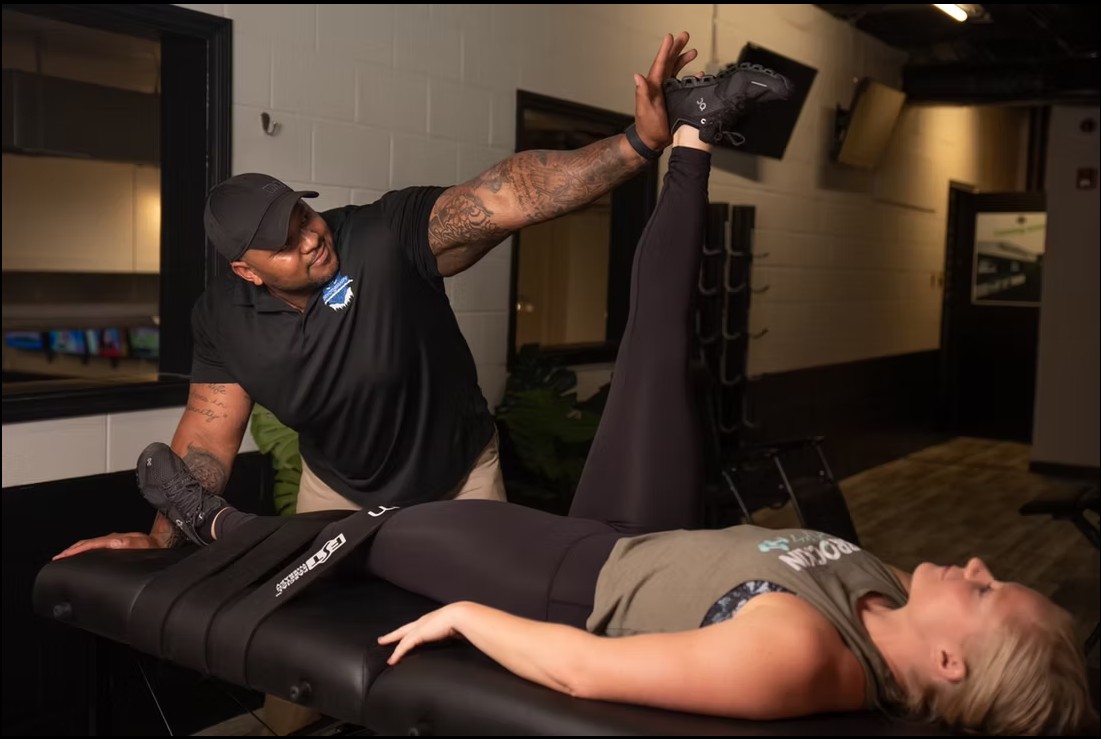
Reset Wellness & Aesthetics lists both whole-body and localized cryotherapy, along with sauna, red light therapy, and fascial stretch. Its first-visit outline includes check-in, a conversation about your goals, a recommendation, and a guided session.
Visit Reset Wellness & Aesthetics at 107 Nature Walk Parkway Unit 102 St. Augustine, FL 32092. Phone: 904-671-9190.
Arrive early in comfortable clothing and bring questions. Before trying cryotherapy at Reset Wellness & Aesthetics, ask which device and exposure protocol your appointment includes. Read the St. Augustine cold plunge guide, then confirm availability, whether the session is private, water temperature, immersion duration, and what to bring.
Florida's heat and humidity make cooling down appealing after outdoor activity, but they do not determine your ideal cold dose. Describe your recent activity and how you feel instead of choosing the lowest setting.
Alternating sauna heat with cold exposure is commonly called contrast therapy. Ask whether such a sequence is appropriate and available; do not improvise rapid temperature changes or enter a cryotherapy chamber wet from a plunge or sauna.
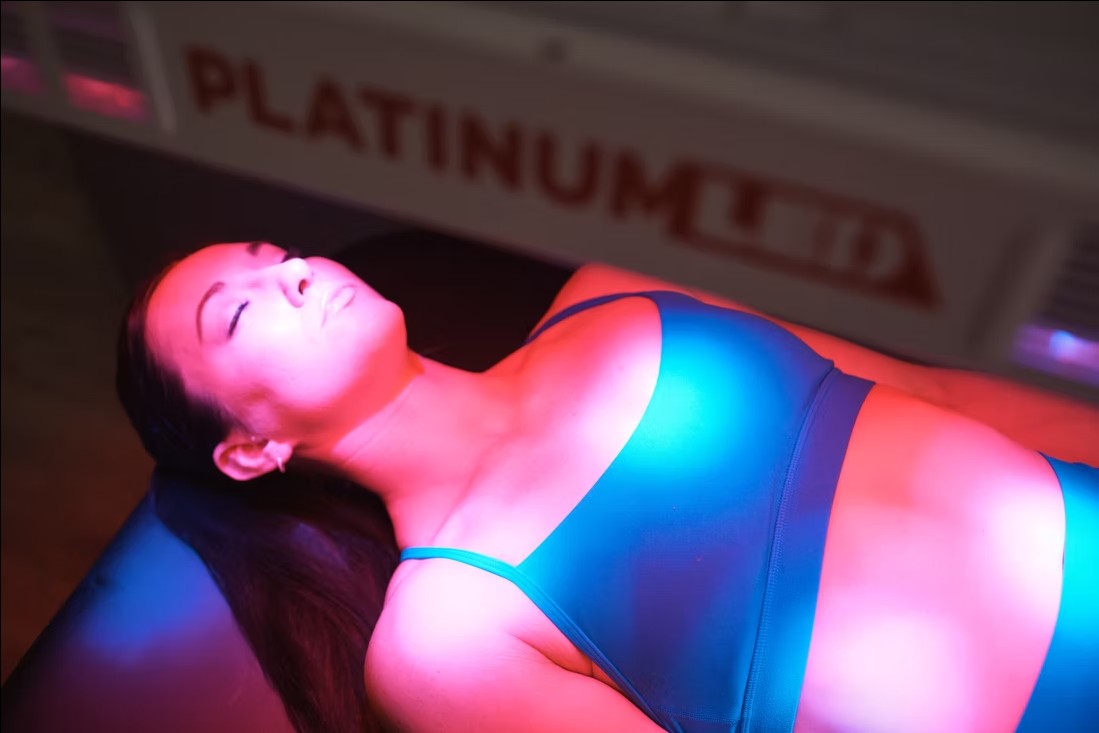
Red light therapy is a separate light-based service, not the hot phase of contrast therapy. Combining services does not by itself establish a greater recovery benefit. You can choose one experience without purchasing a full sequence.
What else should you know before choosing cold therapy?
Session timing, equipment, and individual tolerance affect the experience. These answers address common planning questions without turning research protocols into a universal routine.
Which is better for muscle recovery: an ice bath or cryotherapy?
Cold water immersion has stronger support for reducing short-term soreness after some demanding workouts. Whole-body cryotherapy may suit someone who prefers brief, dry exposure, but its recovery benefits are less certain. Choose according to your health, training priorities, comfort, and cost rather than expecting a universal winner.
Is cryotherapy colder than an ice bath?
Whole-body cryotherapy uses much colder air than the water in an ice bath. Research commonly describes air below −148°F (−100°C), while cold water protocols vary. Those numbers are not directly comparable because water and air transfer heat differently. A lower temperature does not prove better recovery.
How often can you do an ice bath or cryotherapy?
There is no single evidence-based weekly schedule suitable for everyone. Frequency should reflect your health, training load, response, and the provider's protocol. Start by discussing one session, then reassess. Daily use is not necessary, and routine cold water immersion immediately after lifting may conflict with muscle-growth goals.
Can you combine an ice bath and cryotherapy?
Combining an ice bath and whole-body cryotherapy is not necessary, and this guide does not recommend doing them back to back. Discuss any combined session with the provider first. Sauna plus cold exposure is contrast therapy; adding red light therapy is a separate choice, not another cold dose.
How long does a cold therapy session last?
Whole-body cryotherapy exposure commonly lasts two to four minutes. Cold water recovery studies often use around 10–15 minutes, but that is not a beginner target or a universal recommendation. Actual session settings should be individualized. Allow additional appointment time for screening, instructions, changing, and getting comfortable afterward.
Is a cold plunge the same as an ice bath?
Both are forms of cold water immersion. An ice bath uses water and added ice, while a cold plunge uses a chiller to control temperature. Their practical differences include preparation, consistency, and maintenance. When temperature and exposure are comparable, the name alone does not establish better recovery.
Ready to explore a recovery option? Book a session at Reset Wellness & Aesthetics using the "Book Now" button, and share your goals so the team can help you choose an appropriate starting point.