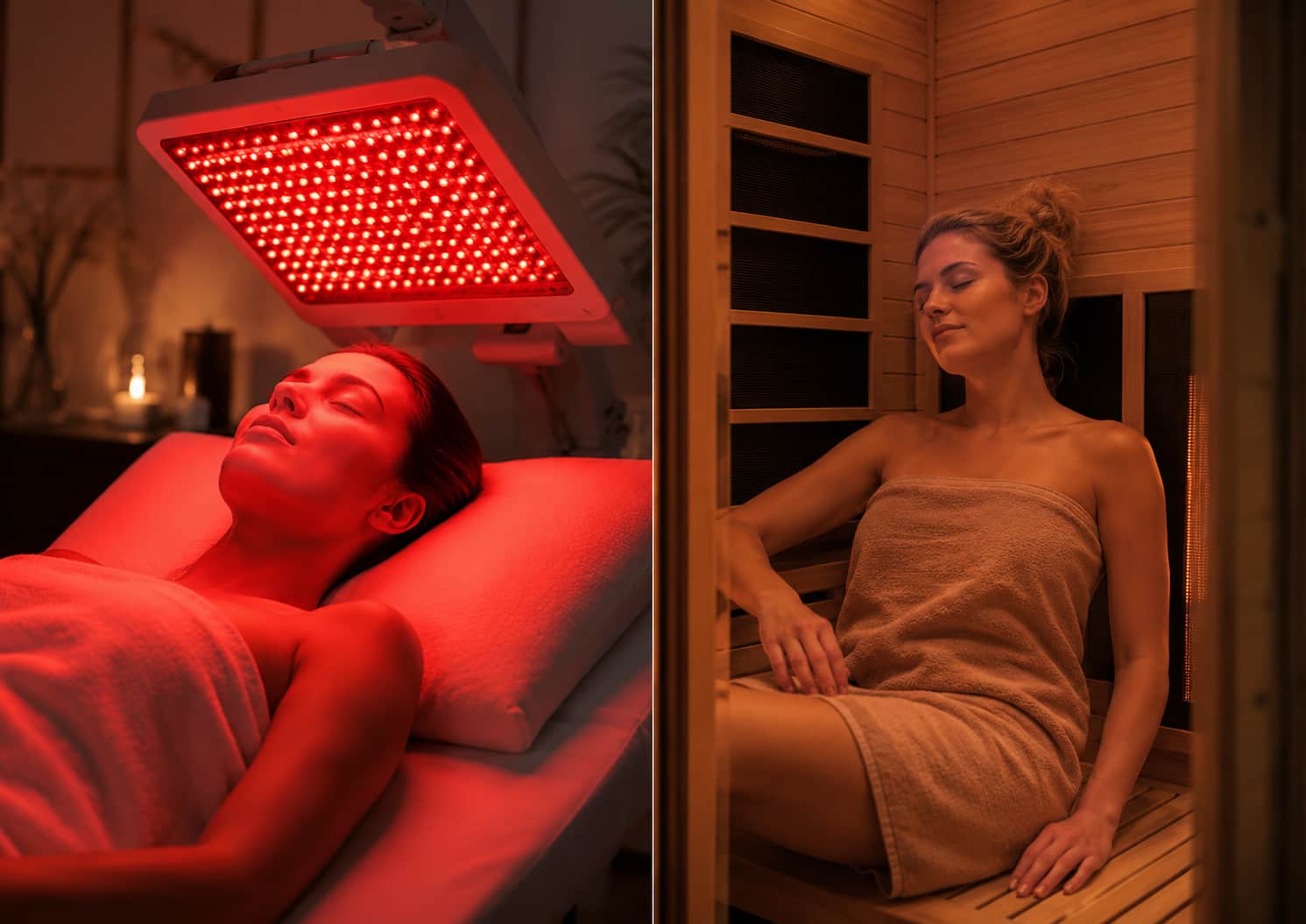
Red light therapy and infrared sauna are both popular wellness treatments, but they work in very different ways. One uses specific wavelengths of light to support cellular activity, while the other uses heat to create a whole-body warming and sweating response.
Because both treatments involve infrared energy in some form, people sometimes assume they provide the same benefits. However, they should not be treated as interchangeable.
The right option depends on what you want to achieve. Red light therapy may be more appropriate for targeted discomfort, exercise-related muscle support, and certain skin concerns. Infrared sauna may be a better fit for relaxation, general stiffness, stress relief, and full-body recovery.
Quick Comparison: Red Light Therapy or Infrared Sauna?
| Your main goal | Treatment to consider | Why it may be suitable |
|---|---|---|
| Targeted joint or muscle discomfort | Red light therapy | Light can be directed toward a specific area |
| General stiffness or body tension | Infrared sauna | Heat provides a whole-body relaxation experience |
| Exercise and muscle recovery | Red light therapy or both | Red light may support targeted recovery, while sauna promotes relaxation |
| Fine lines, skin firmness, or collagen support | Red light therapy | It has more direct research related to skin appearance |
| Sweating and stress relief | Infrared sauna | Designed to warm the body and encourage perspiration |
| Combined skin and recovery goals | Combination approach | Each treatment addresses different aspects of wellness |
What Is Red Light Therapy?
Red light therapy is a non-invasive treatment that exposes the skin and underlying tissue to selected red and near-infrared wavelengths.
It is also known as photobiomodulation. Unlike a sauna, red light therapy is not intended to significantly increase your body temperature or make you sweat.
Researchers believe that cells absorb the light and respond through several biological processes. These responses may influence cellular energy production, circulation, inflammation, and tissue-repair signalling.
A session may focus on one area, such as the knee, shoulder, back, face, or legs, depending on the treatment system and personal goal.
People commonly explore red light therapy for:
- Localised muscle and joint discomfort
- Post-workout recovery
- Skin rejuvenation
- Fine lines and wrinkles
- Skin firmness and elasticity
- Inflammation-related skin concerns
- General wellness support
Results vary according to the device, wavelength, treatment distance, session length, frequency, and individual health condition.
What Is an Infrared Sauna?
An infrared sauna uses infrared heat to warm the body. Traditional saunas primarily heat the surrounding air, while infrared systems are designed to transfer heat more directly to the body.
Infrared sauna rooms generally operate at lower air temperatures than many traditional saunas. However, users can still experience considerable warmth and sweating.
The body’s response may include:
- Increased perspiration
- Temporary increases in heart rate
- Wider blood vessels
- Improved feelings of relaxation
- Reduced sensations of stiffness
- A general feeling of physical recovery
Infrared sauna is usually a whole-body wellness experience rather than a targeted treatment for a specific joint, muscle, or area of skin.
People often choose it when they want to unwind, loosen tight muscles, reduce stress, or incorporate heat therapy into their recovery routine.
Red Light Therapy vs Infrared Sauna for Pain Relief
For a specific painful or uncomfortable area, red light therapy may be the more suitable option.
Because the light can be applied directly to a joint, muscle, tendon, or soft-tissue area, the treatment can be more targeted than a sauna session. Research on photobiomodulation has reported encouraging findings for some musculoskeletal conditions, including certain types of joint discomfort.
However, red light therapy should not be presented as a guaranteed treatment for every type of pain. Outcomes can differ depending on the underlying condition and the treatment protocol. A method that helps one type of discomfort may not produce the same results for another diagnosis.
Infrared sauna may still be helpful when discomfort is connected to general tightness, stiffness, fatigue, or stress. Heat can create a soothing full-body experience and may temporarily make movement feel easier.
Consider red light therapy when:
- The discomfort is concentrated in one area
- You want a non-thermal treatment
- You are managing workout-related soreness
- You want to target a joint or soft-tissue area
Consider infrared sauna when:
- Your whole body feels stiff or tense
- Relaxation is one of your main goals
- You enjoy heat-based wellness treatments
- You want a restorative sweating session
Persistent, severe, unexplained, or worsening pain should be assessed by a qualified healthcare professional.
Which Treatment Is Better for Exercise Recovery?
Both treatments may have a role in a recovery routine, but they support recovery in different ways.
Red light therapy is often selected for performance-focused recovery. It can be directed toward the muscle groups used during exercise and may support the body’s normal recovery processes.
Some photobiomodulation studies have examined its use before or after physical activity. The findings suggest potential benefits for muscle endurance, soreness, and certain recovery markers, although treatment settings and study results vary.
Infrared sauna provides a different kind of recovery experience. Rather than targeting a particular muscle, it surrounds the body with heat. This can encourage relaxation, reduce the feeling of tightness, and help someone mentally and physically decompress after training.
Red light therapy may be preferable for:
- Targeting specific muscle groups
- Supporting a structured athletic recovery plan
- Addressing localised post-workout soreness
- People who do not tolerate intense heat well
Infrared sauna may be preferable for:
- Whole-body relaxation
- General muscle tightness
- Stress relief after exercise
- People who enjoy heat and sweating
A combined routine may also be appropriate. For example, red light therapy could be used for a specific muscle group, followed by an infrared sauna session for general relaxation. The order and timing should be based on comfort, hydration, health history, and professional guidance.
Red Light Therapy vs Infrared Sauna for Skin Health
Red light therapy has a stronger connection to skin-focused goals.
Clinical research has explored the use of red and near-infrared light for skin firmness, elasticity, facial ageing, collagen-related processes, and wrinkle appearance. While individual outcomes are not guaranteed, red light therapy has more direct skin-related evidence than infrared sauna.
Red light therapy may be considered by people interested in:
- Reducing the visible appearance of fine lines
- Supporting smoother-looking skin
- Improving the appearance of firmness
- Maintaining a skin-rejuvenation routine
- Supporting certain inflammation-related skin concerns
Infrared sauna may leave the skin feeling warm or refreshed because of increased sweating and circulation. However, sweating should not automatically be interpreted as collagen stimulation, acne treatment, or skin rejuvenation.
Infrared sauna is primarily a heat and relaxation treatment. It should not be marketed as the equivalent of a targeted red light skin treatment.
Can Red Light Therapy Help With Acne?
Red light therapy may support some people with inflammatory acne because of its potential effects on redness and inflammation. However, it should not be described as a universal acne cure.
Acne treatment frequently involves several factors, including oil production, bacteria, inflammation, hormones, skincare products, and individual skin sensitivity.
Some professional acne protocols combine different light wavelengths or use light alongside other dermatological treatments. Blue light, for example, is frequently studied for its effect on acne-related bacteria, while red light is often associated with inflammation support.
Anyone experiencing persistent, painful, cystic, or scarring acne should consult a dermatologist before relying on a wellness treatment alone.
How Long Does a Red Light Therapy Session Take?
The appropriate session length depends on the equipment, treatment area, wavelength, light intensity, and intended outcome.
A session may last several minutes or longer depending on the system being used. More exposure does not automatically produce better results. Excessive treatment or using a device incorrectly may reduce effectiveness or cause unwanted reactions.
Consistency is often more important than having one unusually long session.
Skin-focused programs commonly involve repeated sessions over several weeks. Pain and recovery programs may use a different schedule based on the area being treated and professional recommendations.
Follow the instructions provided by the device manufacturer or wellness professional rather than copying a schedule from another person.
How Long Should an Infrared Sauna Session Be?
Infrared sauna tolerance varies considerably.
Beginners may need shorter sessions at a lower temperature, while experienced users may be comfortable with longer exposure. Hydration, medications, health conditions, room temperature, and personal heat tolerance can all affect the experience.
During a session, leave the sauna and seek assistance if you experience:
- Dizziness
- Nausea
- Weakness
- Headache
- Chest discomfort
- Difficulty breathing
- Confusion
- Feeling faint or unusually unwell
Longer and hotter sessions are not necessarily healthier. A gradual and individualised approach is safer than trying to tolerate excessive heat.
Is Red Light Therapy Safe?
Red light therapy is generally considered non-invasive and well tolerated when appropriate equipment and treatment settings are used.
However, it may not be suitable for everyone. Extra caution may be necessary for people who:
- Take medications that increase light sensitivity
- Have a light-sensitive medical condition
- Have active skin irritation in the treatment area
- Are receiving treatment for a serious medical condition
- Have been advised to avoid light-based therapies
Eye protection should be used when recommended for the device or treatment area. Home users should select reputable equipment and follow the manufacturer’s safety instructions.
Is Infrared Sauna Safe?
Many healthy adults tolerate infrared sauna sessions well, but heat exposure can place additional stress on the body.
Professional medical advice may be needed before sauna use for people with:
- Unstable cardiovascular conditions
- Recent heart-related medical events
- Blood-pressure concerns
- A history of fainting
- Pregnancy
- Severe dehydration
- Fever or acute illness
- Conditions that affect heat regulation
Alcohol should not be consumed before or during a sauna session. Users should also replace lost fluids and avoid entering the sauna while dehydrated.
Who Should Choose Red Light Therapy?
Red light therapy may be the better starting point when your main concern is:
- A localised joint or muscle area
- Post-exercise soreness
- Fine lines or visible skin ageing
- Skin firmness and elasticity
- A non-thermal wellness treatment
- Targeted tissue support
It may also be suitable for people who dislike high temperatures or cannot comfortably tolerate sauna heat.
Who Should Choose an Infrared Sauna?
Infrared sauna may be more appropriate when your main goal is:
- Full-body relaxation
- Stress reduction
- General stiffness
- A restorative wellness ritual
- Heat-based recovery
- Sweating and physical decompression
The experience is generally less targeted but may feel more immersive and relaxing.
Can You Combine Red Light Therapy and Infrared Sauna?
Yes, the two treatments can be included in the same wellness routine when they are appropriate for the individual.
They are complementary because they do not work in the same way. Red light therapy can focus on a particular area, while infrared sauna provides a broader heat and relaxation experience.
A combined routine may be considered for someone who wants:
- Targeted muscle support and full-body relaxation
- Skin-focused treatment and a heat-based wellness session
- Localised recovery followed by general decompression
- A more comprehensive recovery routine
Combination use does not mean that every person should complete both treatments during every visit. Session timing should be adjusted according to hydration, heat tolerance, medical history, treatment goals, and professional advice.
Frequently Asked Questions
Is red light therapy better than infrared sauna for joint discomfort?
Red light therapy may be the more appropriate choice for a specific joint because it can be applied directly to the affected area. Infrared sauna is more commonly used for general relaxation and whole-body stiffness.
Is infrared sauna better for muscle recovery?
Infrared sauna may help someone feel relaxed and less tense after exercise. Red light therapy may be more appropriate when the goal is to target particular muscles or support a performance-focused recovery routine.
Which treatment is better for wrinkles and collagen support?
Red light therapy has more direct clinical research related to fine lines, firmness, elasticity, and skin-rejuvenation goals. Infrared sauna should primarily be viewed as a heat and relaxation treatment.
Can infrared sauna improve acne?
There is limited direct evidence supporting infrared sauna as a primary acne treatment. Sweating may also irritate some acne-prone skin if sweat, oil, and skincare products remain on the face. People with ongoing acne should seek professional skincare or dermatological advice.
How often should I schedule red light therapy?
Frequency depends on the device and treatment goal. Many programs involve multiple sessions over several weeks, but the correct schedule should be determined by the equipment instructions and professional recommendations.
How often can I use an infrared sauna?
There is no single schedule suitable for everyone. Start conservatively and adjust based on heat tolerance, hydration, health history, and guidance from a qualified professional.
Which treatment should I try first?
Choose the treatment that most closely matches your primary goal. Red light therapy may be a better starting point for targeted pain, muscle support, or skin concerns. Infrared sauna may be preferable for relaxation, sweating, and general stiffness.
Find the Right Treatment for Your Wellness Goals
Red light therapy and infrared sauna can both support a wellness routine, but they serve different purposes.
Red light therapy is generally more suitable for targeted areas, performance-related recovery, and skin-focused goals. Infrared sauna is typically better suited to whole-body relaxation, heat-based recovery, and stress reduction.
At RESET Wellness & Aesthetics, your treatment plan can be based on your goals, comfort level, health history, and preferred wellness experience.
Schedule a consultation to learn whether red light therapy, infrared sauna, or a combination of both may be appropriate for you.
*This article is provided for general educational purposes and is not a substitute for medical diagnosis or treatment. Speak with a qualified healthcare professional if you have a medical condition, take prescription medication, are pregnant, or are uncertain whether light or heat therapy is safe for you.*
Related Services

Ready to explore wellness services in St. Augustine? View our services or book your visit with Reset Wellness & Aesthetics.